
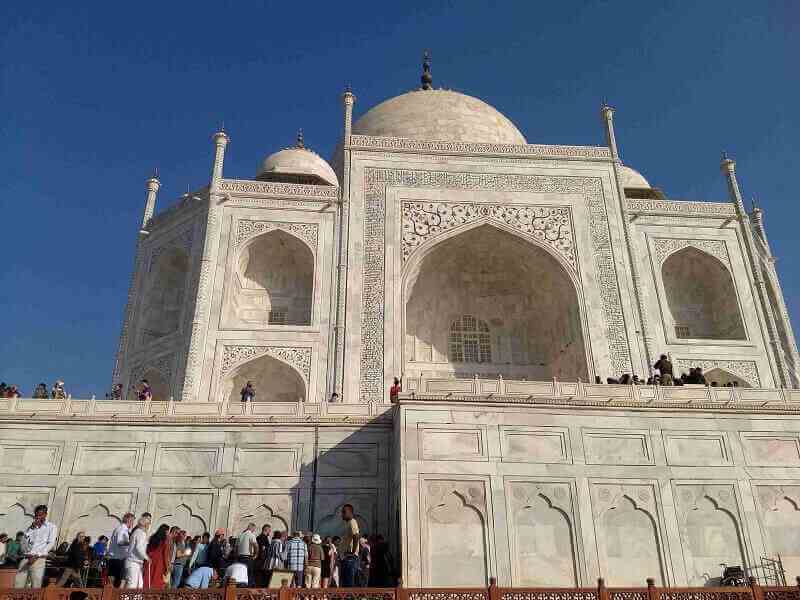
The Taj Mahal is an icon of India and attracts millions of tourists every year. This impressive monument is as amazing as you imagine it to be. The Taj Mahal is one of the many incredible places to visit in Agra. You can also explore the historic Agra Fort, discover the impressive and magnificent tomb of Itimad-ud-Daulah; visit one of India’s largest mosques in Fatehpur Sikri; and find relaxation in Mehtab Bagh, a quiet park in the shadow of the Taj.
Agra has also two compassionate wildlife projects –
- The Agra Bear Rescue Center and
- The Elephant Conservation and Care Center
These places also invite tourists to meet some of the world’s most beloved creatures.
Plan your trip to this historic monument with our list of Agra’s top attractions.
Source – Luxury Travel Expert
1) Taj Mahal
We have seen Taj Mahal in history books, social media posts, and postcards. Now I get a chance to traveling and chance to see the Taj Mahal in real life.
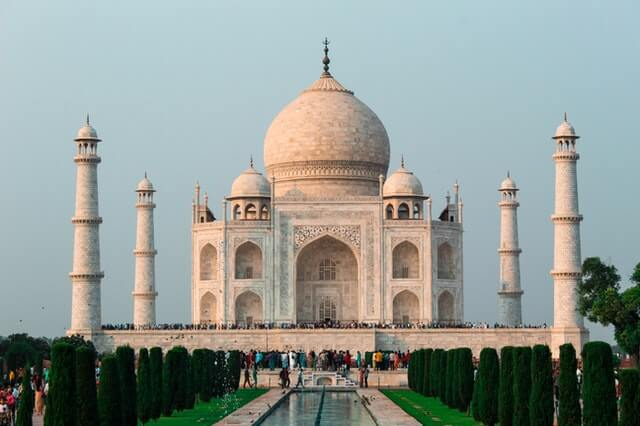
The wonderful building structure which dates back to me to the 17th century. Mughal ruler Shah Jahan was heartbroken when his beloved wife Mumtaz Mahal died in childbirth and then he decided to honor her with a white mausoleum. The construction took over 20 years and a workforce of around 20,000 workers.
It’s never a bad time to see the Taj Mahal, but it’s worth getting there early because the building seems to glow at sunrise. You can enter the Taj Mahal through the east and west gates. Once you reach inside the place you can explore the Ornamental Gardens, with calm waters that reflect the Taj. Next, head to the Taj and admire its perfect symmetry and white marble with ornate flower reliefs and set with semi-precious stones.
Top Tip: keep your ticket to the Taj Mahal, which gives you discounts on entry to other nearby attractions in Agra on the same day, such as Fatehpur Sikri and the tomb of Itimad-ud-Daulah.
Official site: https://www.tajmahal.gov.in/
2. Agra Fort
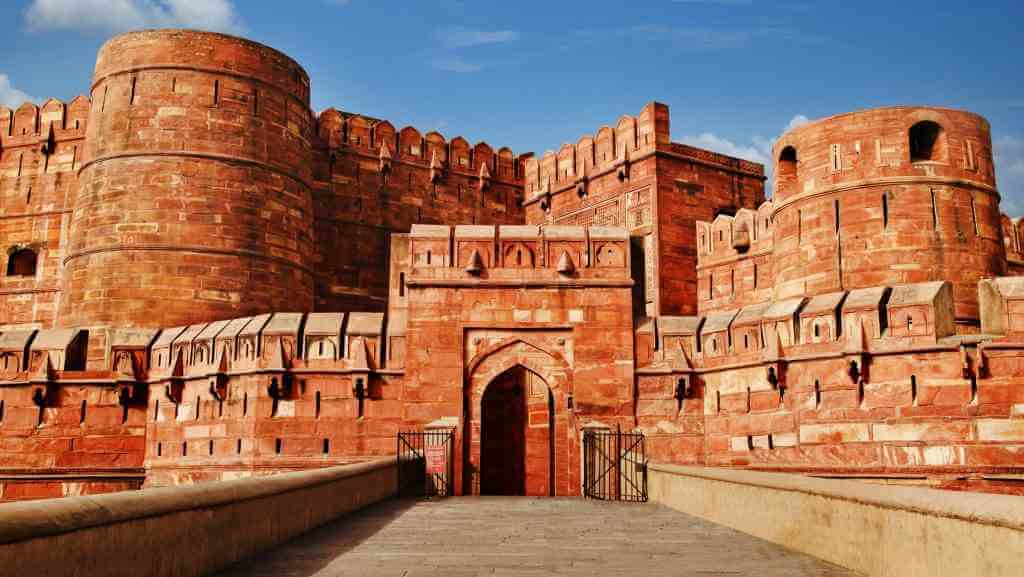
In Agra Taj Mahal is not the only UNESCO World Heritage Site. This city is also home to the Agra Fort. Agra fort is centuries-old red sandstone fortress. This was the imperial city of a number of Mughal rulers.
Sightseeing here is like walking around a city within a city. Jahangir Mahal is the most extraordinary building in Agra Fort, It is a massive palace that combines impressive Hindu-inspired elements (such as closed hanging balconies) with Central Asian architectural elements like characteristic pointed arches.
Source – https://agra.nic.in/tourist-place/agra-fort/
Tourists can also see a variety of other notable structures such as-
- Anguri Bagh- It is a courtyard with garden outlines in the shape of puzzle pieces around water channels),
- Khas Mahal- It is a palace with white marble pavilions and red sandstone,
- Musamman Burj – It is an octagonal tower with intricate marble inlay, and
- Diwan-i-Khas – It is a meeting hall with two black and white marble thrones.
Agra Fort will need at least a couple of hours on your route. It’s a great afternoon after a morning at the Taj Mahal.
Official site: https://agra.nic.in/tourist-place/agra-fort/
3) Sikandra / Tomb of Akbar
This is located on the western outskirts. This building created with the red sandstone and marble tomb. Sikandra was built by Akbar and then completed by his son Jahangir. Its interior is covered in exquisite calligraphy reflecting the teachings of Din-e-Ilahi. Sikandra is the resting place of Mughal Emperor Akbar and his tomb is here in a dark chamber. The Char Bagh-style peripheral garden is another attraction of the place.
Website: https://www.tajmahal.gov.in/nearby-attractions.aspx#Sikandra
4) Soami Bagh
The holy samadh built in Soami Bagh, Agra by the disciples of the Radhasoami faith, is established with love, affection and devotion in memory of Param Purush Puran Dhani Soamiji Maharaj, the exalted founder of the faith.
After Swamiji Maharaj left, the Second Holy Sat Guru, Hujur Maharaj, built a red stone structure in which Swamiji Maharaj preached and sometimes performed satsangs. The structure at that time was sufficient to accommodate all believers, the third Sant Sat Guru, Maharaj Saheb, felt that it was very small and could not accommodate the satsangis of the Radhasoami belief, as Faith ‘expands and suggests demolishing the structure and rebuild a large marble structure that can accommodate all of the Satsangis.
The design work was entrusted to an Italian architect M / s. Firzoni & Co. based in Kanpur. Maharaj Saheb provided the basic settings for the satsang hall and the 15 ‘terrace on all sides etc. The old red stone structure was torn down and the rubble was only used in Holy Samadh. The structure was placed in 52 wells with a diameter between 4 ‘and 10’10 “. Lala Totaram Ji, Holy Engineer of Samadh The proposed modifications and structure were “planned” on an elevated platform of 220’X220, approved by the fourth Sant Sat Guru of Faith ‘BabuJi Maharaj’. The Saint Samadh scale was prepared and was reserved for future engineers. The main hall of satsang is on the ground floor and the walls are covered with marble engravings by Shabds and Bachans by Radhasoami Faith, the canopy in the center houses the sacred ashes of Soamiji Maharaj and Radhaji Maharaj. The false ceiling is made of carved teak and the pillars are made of gold leaf.
The first floor presents striking, fascinating and ornate sculptures on column capitals to a depth of 14 “of trees, flowers and vines. The second floor is installed with the 4 corners and 4 central arches that make hall circular. The round arch features ring beams 10″ carved natural landscapes engraved at a height of 75”. Above is an 85 “balcony offering a mystical view. 9465 MT double dome walls feature rows of flowers and a lotus flower sits in the center of the inner dome A 31’4” tall copper kalsh weighing 6.0M on a stainless steel tube coated with 24 karat gold leaf is an unforgettable sight. The outer dome has a mesh design that is charming on the beholder. The work of Holy Samadh is 95% complete, with the exception of some minor work on the front and keshwas and the canal around it. There are four minerals in the corners of the main building up to to the second floor and above, the octagonal minarets stand-alone up to a height of 141 ‘. Opposite Jharokha is under construction. The total height of the outer dome is 161’ and including Kalash is 193’4 “.
The marbles used in Holy Samadh are of various colors: white, pink, green, yellow and other different colors in different shades that come from different parts of India, mainly Makrana (Jodhpur), Ambaji, Vadodra, Jaislamer, Gwalior.
Semi-precious stones for the inlays are extracted from the beds of various rivers i.e., Narbada and the quarries of Gujarat and southern India. Sapphire, emerald, carnelian, turquoise, lapis lazuli, red coral, onyx, Lajward, Khatoo, Yaqut., Rattak, etc stones are used.
Official Website-https://www.tajmahal.gov.in/soami-bagh.aspx
5) Itimad-ud-Daulah’s Tomb
At the Yamuna River’s bank, there is another exquisite structure of Agra present, known as the tomb of Itimad-ud-Daulah. The mausoleum has the remains of Mirza Ghiyas Beg. Mirza Ghiyas Beg is a Persian official who served the Mughal Empire, as well as his wife.
This jewel box-shaped tomb was actually the inspiration for the Taj Mahal, which earned it the nickname “Baby Taj”. The structure of red sandstone and marble has 13 meter high hexagonal towers at each corner.
The most notable thing is that it was the first structure to use Pietra Dura, the iconic Indian marquetry technique that uses semi-precious stones to create floral designs. Visitor’s see the exquisite geometric patterns, depictions of vases and bowls, and delicate bouquets of flowers from floor to ceiling in the elegant building that is reminiscent of that of the Taj Mahal.
Even though it is so beautiful, Itimad-ud-Daulah’s tomb receives far less visitors than other attractions in the Agra area, making it a great place to take in the beautiful features without the crowds.
Address: Moti Bagh, Agra, Uttar Pradesh 282006
6) Mehtab Bagh
Mehtab Bagh gardens and the Taj Mahal
The Taj Mahal almost seems to extend across the Yamuna River at Mehtab Bagh (Moonlight Garden), a square garden complex measuring 300 meters on each side. It’s the only remaining park in a series of nearly a dozen Mughal-built gardens in the area.
The park has some pretty flowering trees and bushes—a stark improvement from its state in the mid-1990s, when the site was just a mound of sand. The Archeological Survey of India is hard at work restoring Mehtab Bagh to its original glory by planting Mughal-era plants, so in the future, it may become Agra’s answer to New York City’s Central Park.
Mehtab Bagh Gardens and the Taj Mahal
The Taj Mahal appears to stretch almost across the Yamuna River to the Mehtab Bagh (Moonlit Garden), a complex of square gardens 300 meters in diameter. It is the only remaining park in a series of nearly a dozen Mughal gardens in the region.
The park has a few trees and shrubs in bloom, a big improvement on its state in the mid-1990s when the site was just a mound of sand. The Archaeological Survey of India is working hard to restore Mehtab Bagh to its original splendor by planting Mughal-era plants so that it could become Agra’s answer to New York’s Central Park in the future.
The landscape aligns perfectly with the gardens of the Taj, making it one of the best places in Agra to get a view (or a photo) of the stunning structure—especially at sunset. Outside of the gates to the complex, you can shop for Taj Mahal trinkets and other souvenirs from sellers in the area.
Address: Dharmapuri, Forest Colony, Nagla Devjit, Agra
The landscape goes perfectly with the Taj Gardens, making it one of the best places in Agra to get a peek (or photo) of the impressive structure, especially at sunset. Just outside the resort, you can buy Taj Mahal trinkets and other souvenirs from local vendors.
Address: Dharmapuri, Forest Colony, Nagla Devjit, Agra
3) Fatehpur Sikri
Fatehpur Sikri is just an hour’s drive from the Taj Mahal and is an interesting day trip from Agra. The city, was built by Akbar as a tribute to the famous Sufi saint Sheikh Salim Chishti (accurately predicted the birth of a successor) and is the capital of Mughal Empire about 500 years ago. The residents left the city shortly not after it was built but when the water supply became too scarce.
Tourists can explore the well-preserved remains of this red sandstone ghost town that is still surrounded by a wall. Take a look at the Jama Masjid, a mosque and one of the city’s first completed buildings. Next, you can also explore the three palaces built for each of Akbar’s wives. They combine a diversity of religiously inspired architectural styles that honor the individual spirituality of women.
Immerse yourself in this incredible site by visiting the Archaeological Museum near the main gate of Diwan-i-Am. It contains Finally, think outside the box and climb to the Hiran Minar. It is a spiked circular tower covered in stone elephant tusks, on the top of which Akbar himself is said to have spotted wildlife.
four galleries. These are full with treasures from the Mughal era and beyond, including ragged gray ceramic vessels, terracotta lamps, tiny human stone heads, jewelry shapes, and many more.
Official site: https://www.tajmahal.gov.in/fatehpur-sikri.aspx
4) Gurudwara Guru ka Tal
The Mughals spread Islam in this part of India, but the Agra area is also home to a devout Sikh community. Various members of this community make pilgrimages to Gurudwara Guru ka Tal, a spiritual center near Agra.
The Gurudwara Guru ka Tal was built in the 17th century, and today tourists can see the eight remaining towers of the building’s original dozen. You can also enjoy free meals in the communal kitchen, which is perfect for refueling before heading back to town.
Official Website: https://www.gurdwaragurukataal.com/
Address: Gurudwara Dukh Niwaran Guru Ka Taal, Agra-Delhi Highway, Agra – 282007